Skip to main content
Side panel
Dashboard
CME Catalog
Transcript
Join/Renew
Checkout
Search
Close
Search
Toggle search input
You are not logged in. (
Log in
)
Catalog
Home
Catalog
Page
1
2
3
...
8
Clinical Dialogue and eCase Challenge CME
Clinical Dialogues are video-based moderated discussions featuring leading experts providing the latest patient management guidelines. eCase Challenges are interactive text or or video-based cases where PAs are presented with challenging case scenarios a
Credit Amount: 4.00
Member Price: $0.00
Nonmember Price: $0.00
JAAPA CME Podcasts
Join PA co-hosts Martine Altieri, Kim Ketchersid, and Joe Harrison as they discuss current topics in JAAPA CME podcast episodes.
Credit Amount: 5.25
Member Price: $0.00
Nonmember Price: $25.00
JAAPA CME Post-Tests
JAAPA CME post-tests are available in AAPA's monthly clinical journal or online.
Credit Amount: 26.00
Member Price: $0.00
Nonmember Price: $39.00
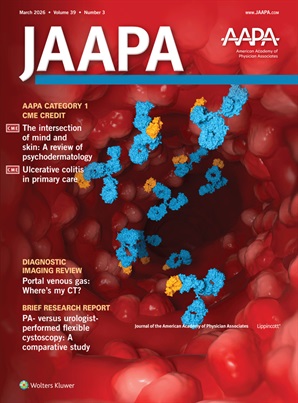
JAAPA CME Post-Test March 2026
Exploring the Intersection of Mind and Skin: A Comprehensive Review of Psychodermatology | A Clinical Update on Ulcerative Colitis for Primary Care
Credit Amount: 2.00
Member Price: $0.00
Nonmember Price: $39.00
Family Medicine on Demand 2026
Featuring recorded sessions from the 2026 We Are Family (Medicine) conference, the Family Medicine on Demand 2026 course is designed for Physician Associates (PAs) and Nurse Practitioners (NPs) in family medicine, offering essential, evidence-based content to enhance clinical practice. This video-based CME activity offers up to 33.25 credits of AAPA Category 1 CME. Topics address a broad range of primary care priorities, including outpatient coding and billing, cardiovascular conditions such as atrial fibrillation and other arrhythmias, pediatric gastrointestinal disorders, autoimmune and dermatologic conditions, chronic disease management, preventive care, diagnostic reasoning, and emerging applications of artificial intelligence in healthcare. The course is designed to be flexible and self-paced, with expert-led video content that empowers providers to stay current with best practices, enhance clinical decision-making, and improve patient outcomes across diverse health conditions.
Credit Amount: 33.25
Member Price: $599.00
Nonmember Price: $799.00
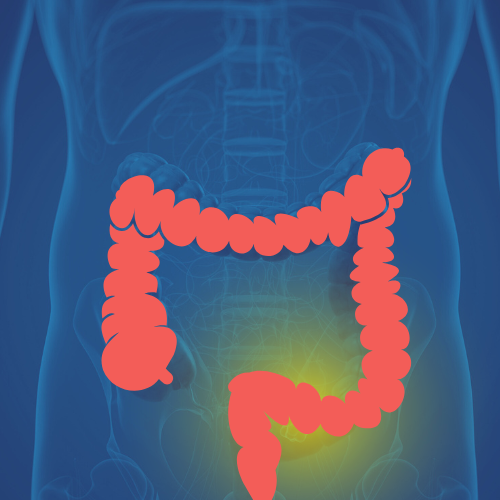
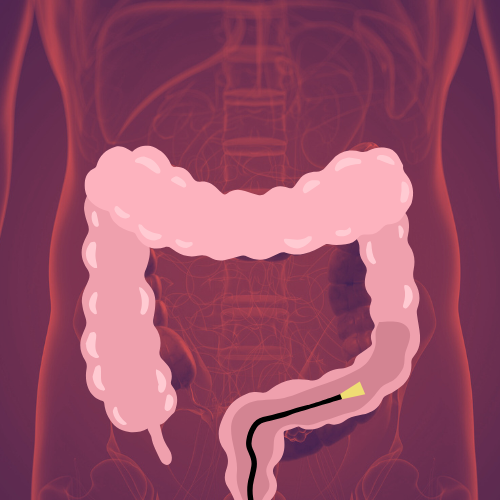
Colorectal Cancer Screening
Colorectal cancer (CRC) remains one of the most preventable yet deadly malignancies, and timely screening is central to reducing its burden. This expert‑led program delivers a concise, evidence‑based review of CRC screening, bridging epidemiology and disease biology with guideline‑driven clinical decision‑making. The faculty will examine CRC natural history, progression, and staging to highlight the powerful role of screening in identifying and removing precancerous lesions before cancer develops. Participants will explore current gaps in CRC screening across the United States, with discussion on persistent disparities—particularly among populations served by federally qualified health centers (FQHCs). Emerging incidence and mortality trends will be reviewed, including the concerning rise in CRC among adults younger than 50 years, reinforcing the rationale for initiating screening at age 45 and expanding proactive screening efforts. The program synthesizes national recommendations for CRC screening in average‑risk adults and provides a practical comparison of available screening modalities. Stool‑based and direct‑visualization tests will be discussed in detail, with attention to screening intervals, test performance, patient logistics, follow‑up requirements, and real‑world feasibility. Emphasis will be placed on translating evidence into practice—helping clinicians navigate test selection, address barriers to adherence, and improve screening completion. The session will conclude with actionable strategies to individualize CRC screening based on patient risk factors, preferences, and access considerations, empowering clinicians to deliver patient‑centered preventive care and improve screening uptake and outcomes.
Credit Amount: 1.00
Member Price: $0.00
Nonmember Price: $0.00
Strategies to Improve Colorectal Cancer Screening
Colorectal cancer (CRC) remains a leading cause of cancer morbidity and mortality, yet screening rates remain suboptimal—particularly among medically underserved populations. This evidence‑based educational program provides a practical, systems‑focused roadmap for improving CRC screening across diverse clinical settings, including federally qualified health centers (FQHCs). Drawing from real‑world quality improvement (QI) initiatives and national guidelines, participants will explore proven strategies to increase screening uptake, reduce disparities, and strengthen follow‑through on abnormal results. The program reviews key barriers to CRC screening at the patient, provider, system, and social determinant levels and highlights effective, scalable interventions endorsed by the CDC Community Preventive Services Task Force. Participants will learn how to implement and optimize evidence‑based interventions, such as provider assessment and feedback, provider and patient reminder systems, reduction of structural barriers, and the use of patient navigators. Emphasis is placed on multidisciplinary, team‑based approaches; intelligent use of EHR; and patient‑centered communication strategies, including shared decision‑making and tailored education. Through applied examples, impact‑effort prioritization tools, and best‑practice workflows, this session equips participants with actionable strategies to sustainably improve CRC screening rates within their own clinical settings and patient populations.
Credit Amount: 1.00
Member Price: $0.00
Nonmember Price: $0.00
JAAPA CME Podcast - Impact of adverse event exposure on PA and APRN well-being
Adverse events, near misses, and medical errors are occupational hazards that contribute to burnout. Join us as we discuss research surrounding the PA and APRN experience after an adverse event and learn about how we can support each other after such an event.
Credit Amount: 0.50
Member Price: $0.00
Nonmember Price: $25.00
JAAPA CME Post-Test February 2026
Female Chronic Pelvic Pain: From Trauma-Informed Assessment to Evidence-Based Treatment | Managing the Wait: A Practical Guide to Diagnosis and Management of Common Endocrine Conditions
Credit Amount: 2.00
Member Price: $0.00
Nonmember Price: $39.00
JAAPA CME Podcast - Elevating Obesity Care in Primary Practice: PAs in Obesity Medicine's Expert Take
In this episode, we sit down with the board of PAs in Obesity Medicine (PAOM) for a candid, practice-focused conversation on elevating obesity care in primary care. From reframing obesity as a chronic disease to integrating evidence-based treatments into busy clinics, our guests share real-world insights, clinical pearls, and strategies PAs can use today. Whether you’re new to obesity medicine or looking to deepen your impact, this episode offers a forward-looking look at how PAs are leading the future of comprehensive, compassionate obesity care.
Credit Amount: 1.00
Member Price: $0.00
Nonmember Price: $25.00
Psych Congress PA Institute on Demand 2025
Featuring recorded sessions from the Psych Congress PA Institute 2025 conference, the Psych on Demand 2025 course is designed for Physician Associates (PAs), Nurse Practitioners (NPs), and other clinicians involved in mental health care, offering essential, evidence-based content to enhance clinical practice. This video-based CME activity offers up to 15.5 credits of AAPA Category 1 CME. Topics include the evaluation and management of ADHD with comorbid psychiatric conditions, major depressive disorder, bipolar disorder, schizophrenia, and tardive dyskinesia, as well as strategies for addressing psychiatric emergencies and complex mood disorders. Learners will also explore practical approaches to polypharmacy, the use of long-acting injectable antipsychotics, lifestyle psychiatry, and the integration of CBT and motivational interviewing into routine care. Additional sessions address emerging areas such as generative AI in psychiatry, interdisciplinary collaboration, and career development for PAs in mental health. The course is designed to be flexible and self-paced, featuring expert-led video content that supports clinical decision-making and patient-centered care across a range of psychiatric practice settings.
Credit Amount: 15.50
Member Price: $299.00
Nonmember Price: $499.00
eCase Challenge - From Symptoms to Solutions: Multidisciplinary Strategies for Managing Post-COVID Sequelae
Post-COVID conditions (commonly known as Long COVID or post-acute sequelae of COVID-19 [PASC]) refer to a constellation of new, returning, or persistent health problems experienced at least 3 months after an initial SARS-CoV-2 infection that last for at least 2 months and cannot be explained by alternative diagnoses. Long COVID is a multisystem chronic condition: it can involve nearly any organ system and present with a wide array of symptoms, ranging from fatigue, cognitive dysfunction (“brain fog”), and dyspnea to chest pain, palpitations, or neuropsychiatric effects. Long COVID can cause significant functional impairment and even meet criteria for disability in many cases. The landscape of Long COVID research and clinical guidance is evolving at a rapid pace. Primary care and infectious disease providers should stay attuned to new developments, as today’s uncertainties may yield to tomorrow’s breakthroughs.
Credit Amount: 1.00
Member Price: $0.00
Nonmember Price: $0.00
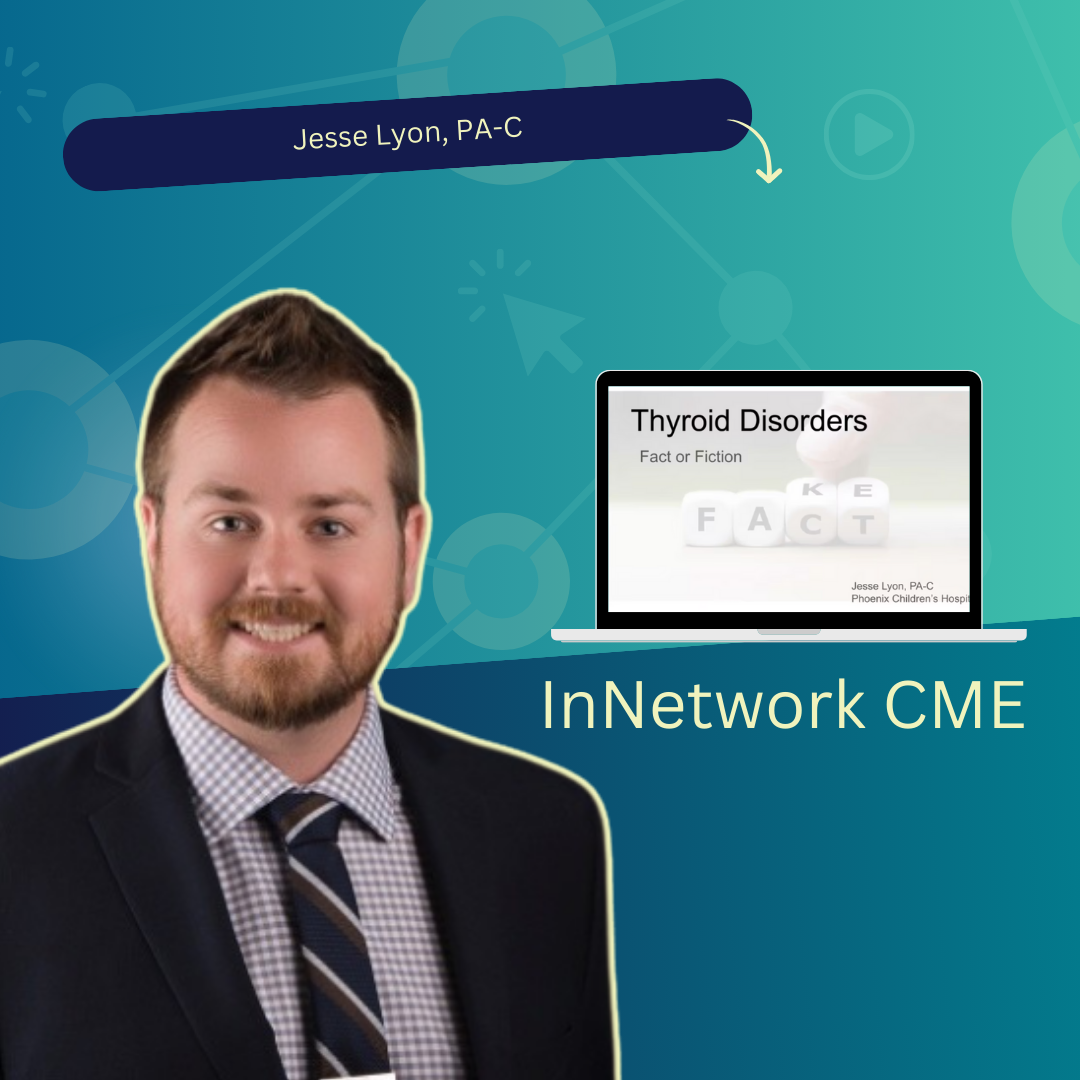
InNetwork CME - Thyroid Disorders: Fact or Fiction
Patients with thyroid disorders often have questions about management due to non-reputable information sources. Lifestyle and supplemental therapy recommendations are growing in frequency, but the validity of these claims and evidence behind them are often lacking. This presentation will review the most up-to-date, evidence-based findings for testing interpretation, lifestyle recommendations, and treatment options. It is designed for clinicians in any field of practice who encounter patients with questions about thyroid disease.
Credit Amount: 0.50
Member Price: $19.00
Nonmember Price: $29.00
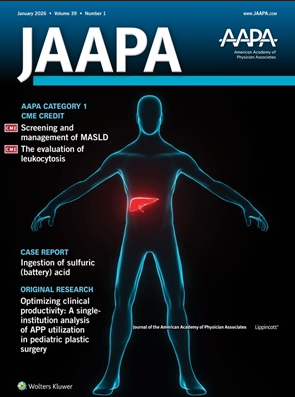
JAAPA CME Post-Test January 2026
Screening and Management of Metabolic Dysfunction-Associated Steatotic Liver Disease (MASLD) | The Evaluation of Leukocytosis
Credit Amount: 2.00
Member Price: $0.00
Nonmember Price: $39.00
JAAPA CME Podcast - Menopausal Hormone Therapy
Menopausal hormone therapy (MHT) has been a hot topic, especially as the FDA removed menopause hormone therapy black box warning this month (November, 2025). To better understand how MHT can benefit women's health, tune into this enlightening conversation with JAAPA authors Ashley Church and Megan Biagi and JAAPA OBGYN Department Editor Alannah Zheng.
Credit Amount: 0.50
Member Price: $0.00
Nonmember Price: $25.00
2025 State Legislative Health Workforce Trends - Interactive
This activity will provide insight into current state legislative priorities on health workforce policy topics from the National Conference of State Legislatures’ (NCSL) Health Workforce Legislative Database and insights from state policymakers. Attendees will learn the state legislature’s role in health workforce and navigate state legislation examples on a variety of topics. Attendees will explore NCSL research and resources on health workforce topics like scope of practice, recruitment and retention, licensure and certification, and education and training.
Credit Amount: 1.00
Member Price: $0.00
Nonmember Price: $25.00
Physician Assistants in Orthopaedic Surgery (PAOS) 2025 Bundle
The PAOS 2025 Bundle includes PAOS on demand 2025, offering up to 19.5 AAPA Category 1 CME credits and 5 AAPA Category 1 Self-Assessment CME credits with on-demand sessions designed to advance your knowledge in orthopaedics. This comprehensive orthopaedic course offers an in-depth look at current concepts, emerging techniques, and practical decision-making across the full spectrum of musculoskeletal care. Sessions highlight advances in imaging, biologics, arthroplasty, sports injuries, pediatrics, spine health, and oncologic evaluation, with emphasis on efficient workup, accurate diagnosis, and evidence-informed treatment planning. Faculty also address professional practice topics, including PA-physician collaboration, reimbursement updates, certification requirements, and optimizing clinical and surgical roles. This series brings together clinically relevant insights that support high-quality orthopaedic care across diverse patient populations. Physician Assistants in Orthopaedic Surgery (PAOS) 2025 Bundle is a collaboration between AAPA and Physician Assistants in Orthopaedic Surgery (PAOS).
Credit Amount: 19.50
Member Price: $449.00
Nonmember Price: $599.00
Physician Assistants in Orthopaedic Surgery (PAOS) on Demand 2025
This comprehensive orthopaedic course offers an in-depth look at current concepts, emerging techniques, and practical decision-making across the full spectrum of musculoskeletal care. Sessions highlight advances in imaging, biologics, arthroplasty, sports injuries, pediatrics, spine health, and oncologic evaluation, with emphasis on efficient workup, accurate diagnosis, and evidence-informed treatment planning. Faculty also address professional practice topics, including PA-physician collaboration, reimbursement updates, certification requirements, and the optimization of clinical and surgical roles. This series brings together clinically relevant insights that support high-quality orthopaedic care across diverse patient populations. Physician Assistants in Orthopaedic Surgery (PAOS) on Demand 2025 is a collaboration between AAPA and Physician Assistants in Orthopaedic Surgery (PAOS). Physician Assistants in Orthopaedic Surgery (PAOS) on Demand 2025 is a collaboration between AAPA and Physician Assistants in Orthopaedic Surgery (PAOS).
Credit Amount: 19.50
Member Price: $399.00
Nonmember Price: $549.00
Physician Assistants in Orthopaedic Surgery (PAOS) Self-Assessment 2025
This case-based self-assessment activity outlines the evaluation and treatment of extremity injury, plus new clinical and technical skills to improve the delivery of healthcare to patients with upper and/or lower extremity trauma. This CME expires December 31, 2027, 11:59 PM EST. Physician Assistants in Orthopaedic Surgery (PAOS) Self-Assessment 2025 is a collaboration between AAPA and Physician Assistants in Orthopaedic Surgery (PAOS).
Credit Amount: 5.00
Member Price: $149.00
Nonmember Price: $249.00
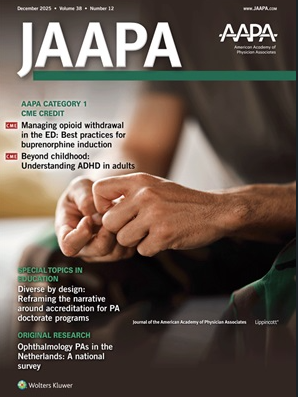
JAAPA CME Post-Test December 2025
Managing Opioid Withdrawal in the ED: Best Practices for Buprenorphine Induction | Beyond Childhood: Understanding ADHD in Adults
Credit Amount: 2.00
Member Price: $0.00
Nonmember Price: $39.00
Page
1
2
3
...
8







 (1).png)